TELESTREAM • B2B SAAS • CLOUD ENABLED
Capture Redesign
Transforming a complex broadcast ingest platform into a clearer, cloud-ready experience teams could trust during live production.
ROLE
Lead Product Designer
TIMELINE
10 months
TEAM
Sole designer with Product & Engineering
OWNERSHIP
Research, strategy, interaction design, testing & design system
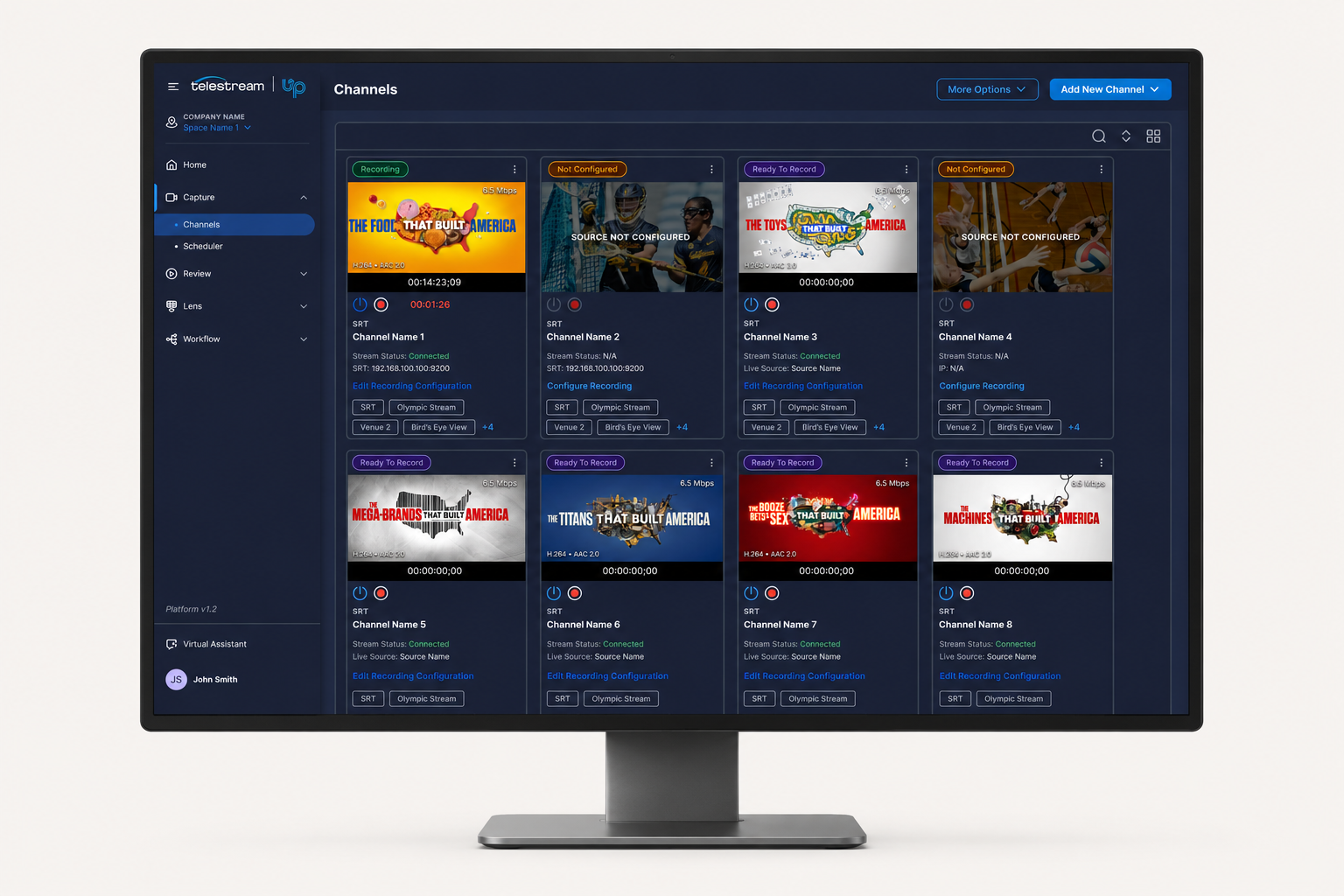
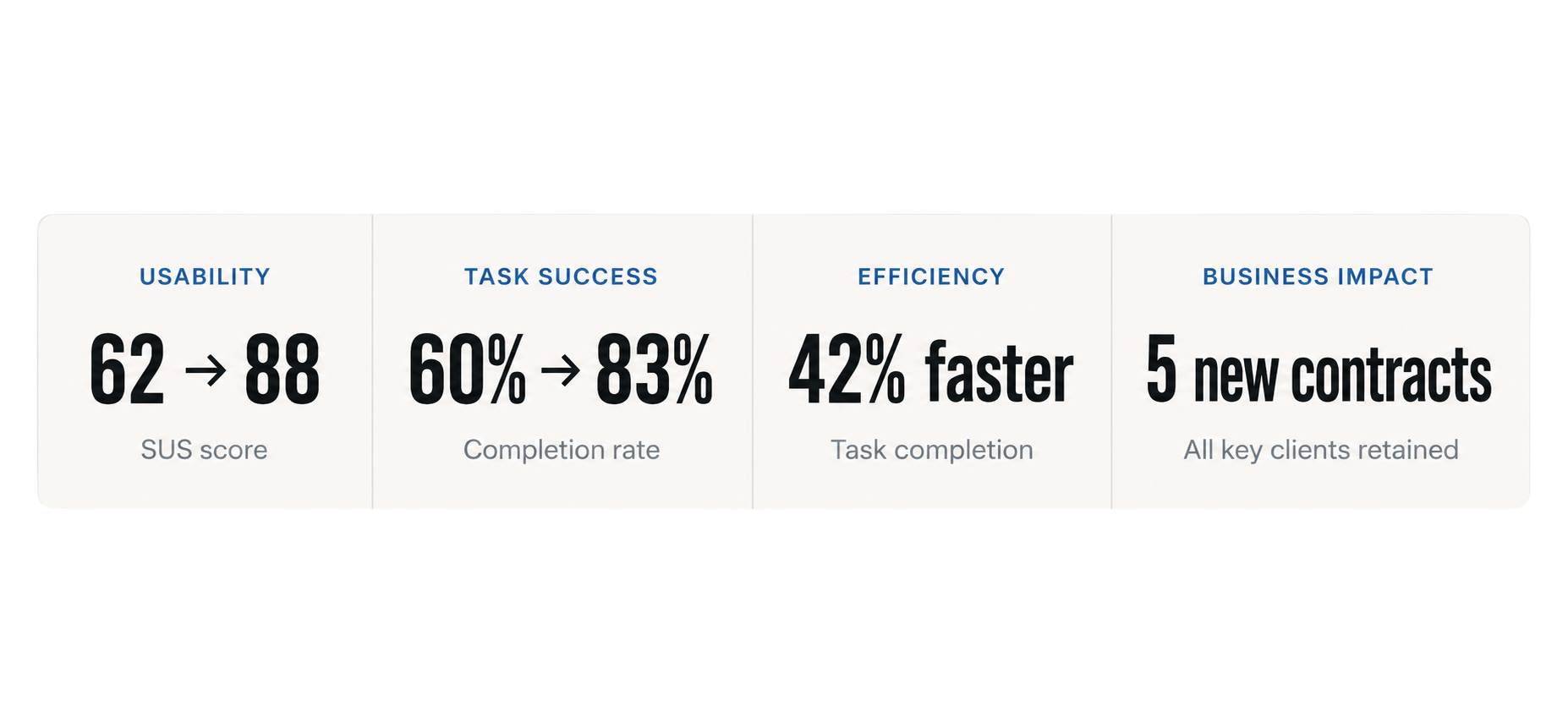
*Measured impact — usability benchmarks (Legacy vs redesigned experience) and business outcomes.
01 • PROBLEM
A trusted product was
losing ground.
LiveCapture remained on-premises while broadcast production moved toward cloud and hybrid workflows. Its outdated interface, limited feedback, and repetitive setup made high-stakes work harder than it needed to be.
BUSINESS PROBLEMS
• 28% revenue decline
• Customer churn and stalled acquisition
• On-premise architecture limited remote workflows
• Outdated experience weakened product perception
USER PROBLEMS
• Configuration errors failed silently
• Channel types were difficult to identify
• No centralized stream-health monitoring
• Recurring sessions required repetitive setup
How might we redesign LiveCapture to deliver a more intuitive, reliable, and scalable experience—while preserving critical broadcast workflows and preparing the product for a cloud-first future?
02 • RESEARCH
Four insights shaped the redesign
I ran user interviews with current clients (10 participants) to surface pain points firsthand, then mapped the findings into two personas — Admin and Operator — whose needs diverged enough to shape distinct parts of the flow. Alongside that, I built a user flow chart and ran a competitive analysis against cloud-native competitors to understand where Capture had fallen behind.
01
Confidence was missing
The system did not clearly confirm when channels were configured correctly
02
Operators were flying blind
Stream health, metadata, and transport information were difficult to access.
03
Repetition created risk
Channels were reconfigured and workers disconnected manually.
04
Cloud changed everything
Setup, monitoring, access, and system status all needed to support hybrid environments.
03 • DESIGN DECISIONS
The research changed
what we prioritized.
I moved from low-fidelity workflows to tested interactions in close partnership with Product and Engineering. Four decisions had the greatest effect on user confidence, speed, and operational risk.
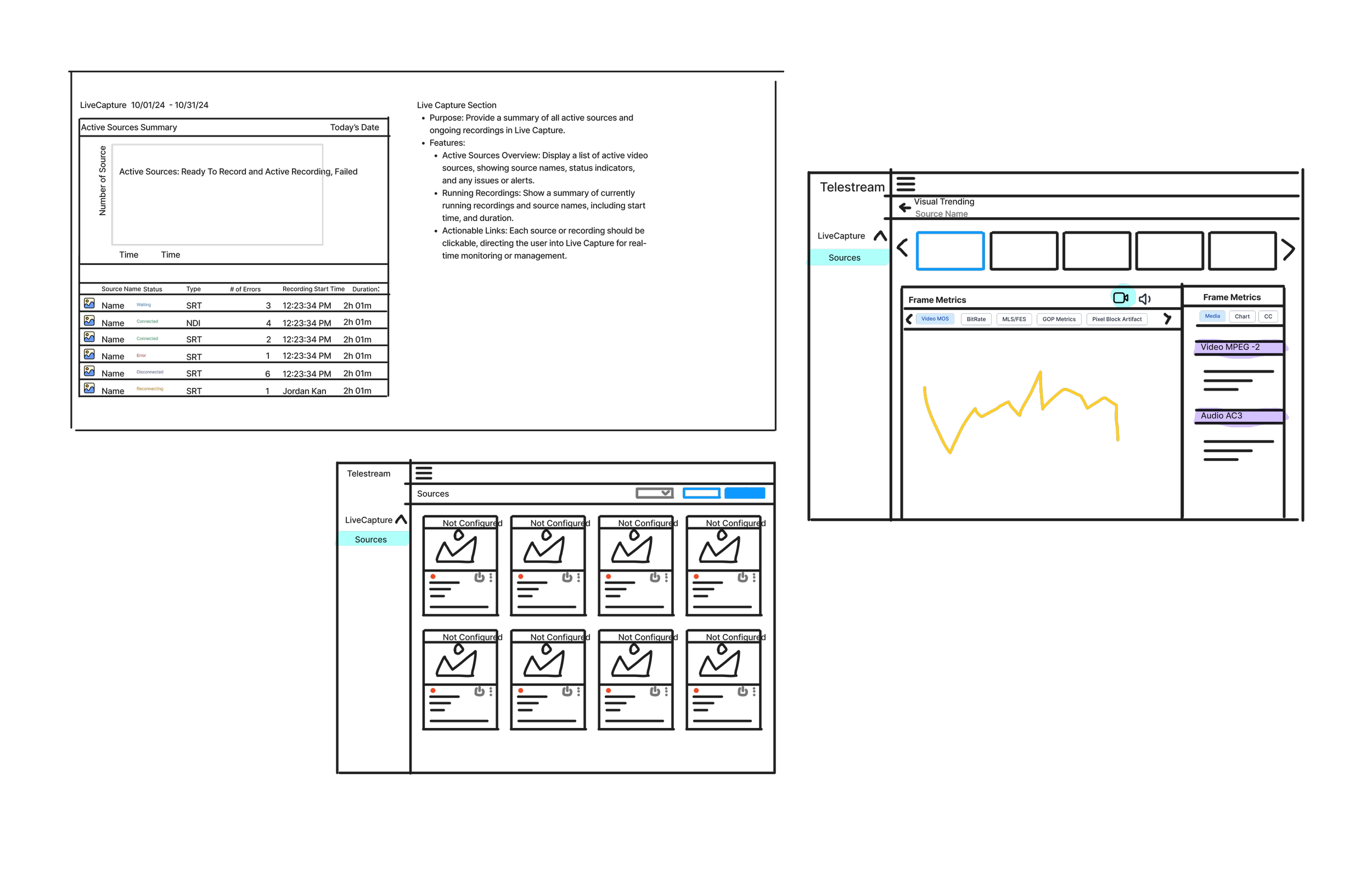
CHANNEL SETUP EXPLORATION
1. READINESS & STATUS
Make the system state impossible to miss.
The legacy product gave little confirmation that a channel was configured correctly. Operators had to infer readiness—and errors could remain hidden until recording began.
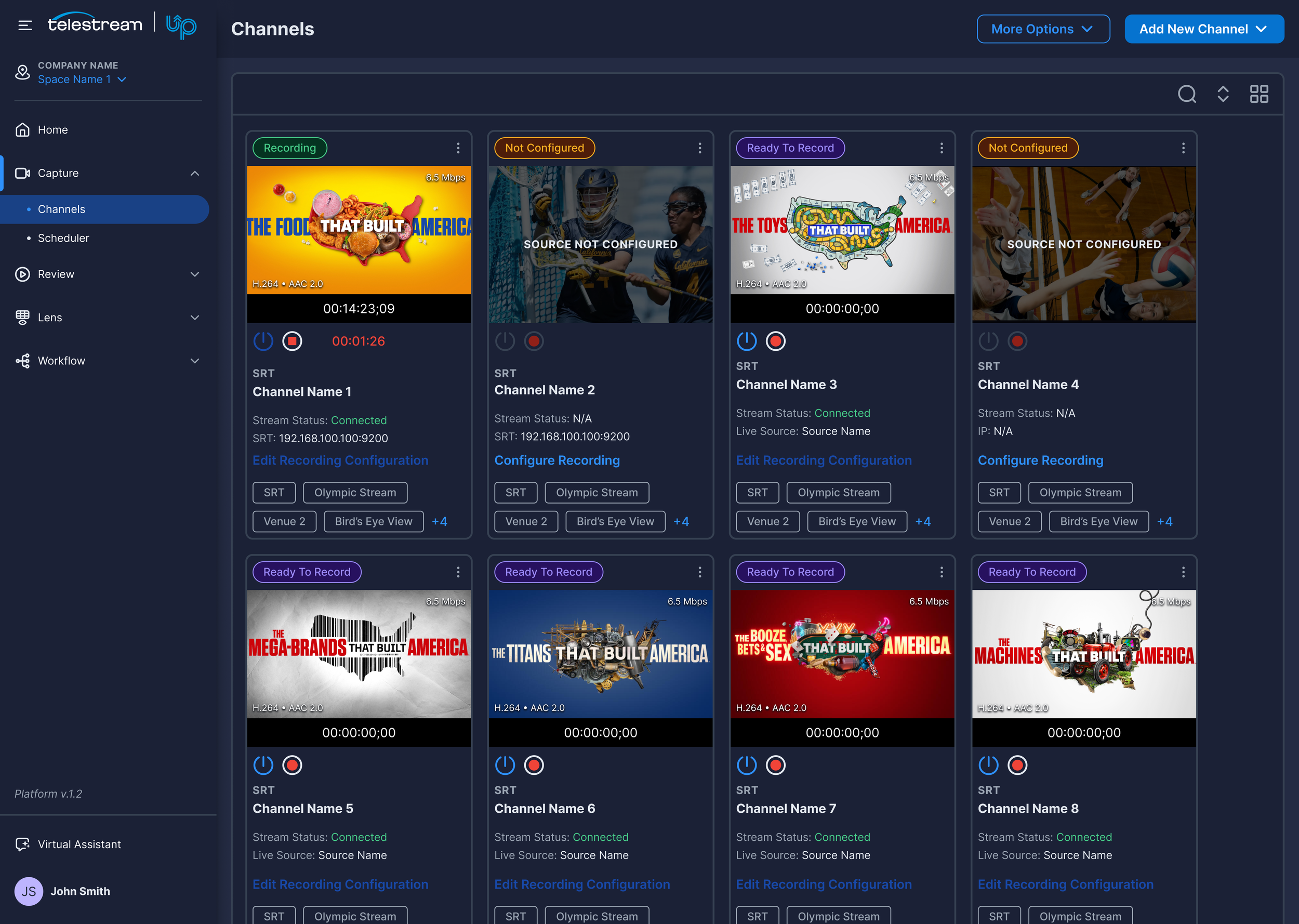
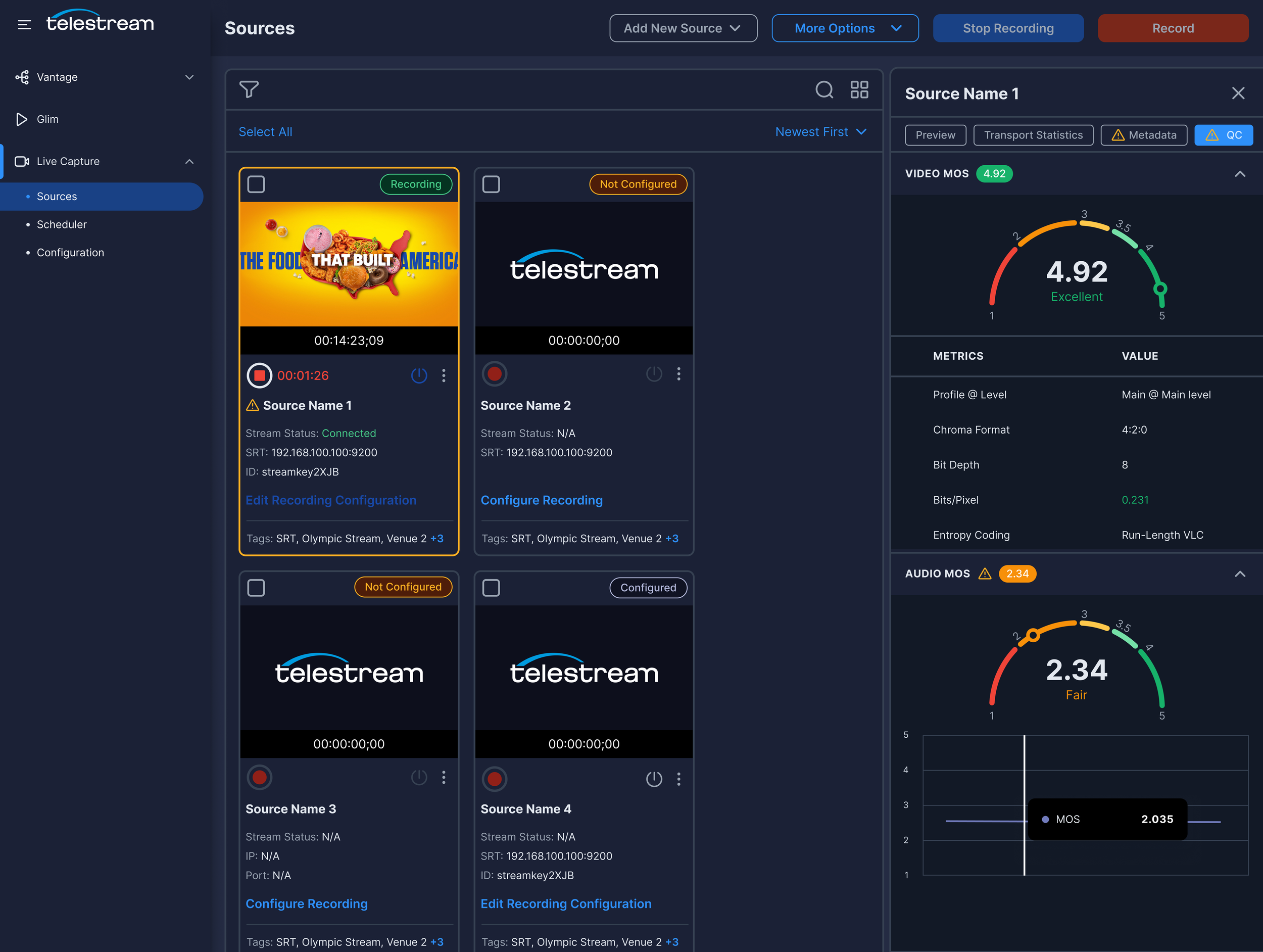
I introduced inline validation, persistent channel-type labels, and explicit readiness states at the point of action.
DESIGN RESPONSE
2. WORKER AUTOMATION
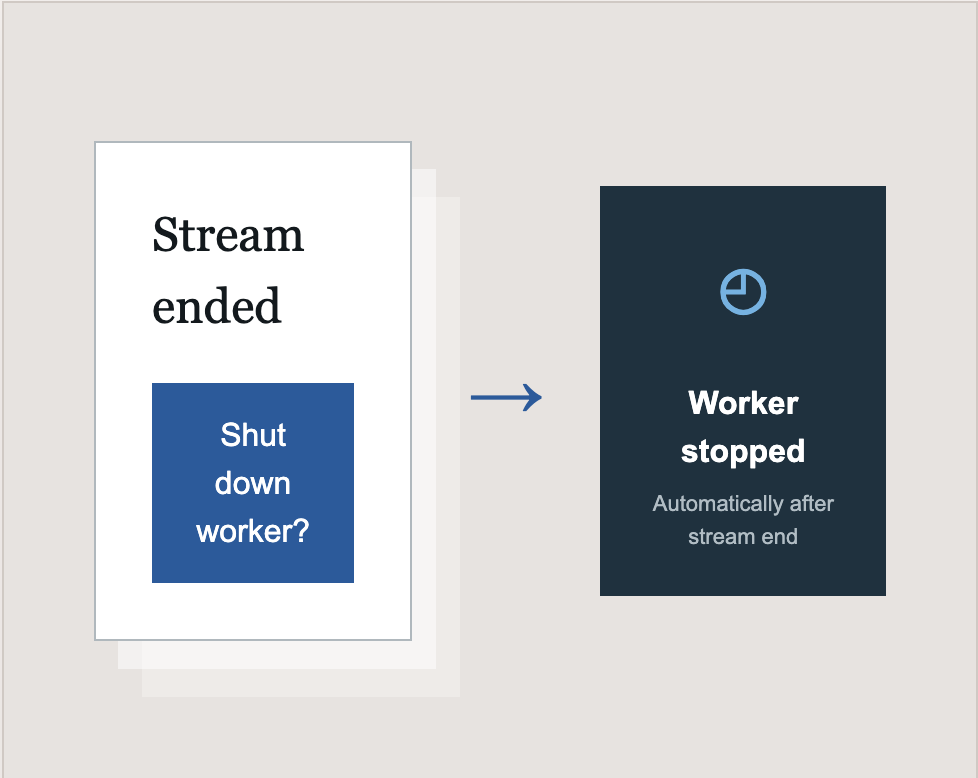
A confirmation modal worked for one channel—not twenty.
My initial safeguard asked users to confirm every worker shutdown. Testing the idea against real multi-channel workflows revealed that repeated interruptions would slow operators down.
I replaced repeated prompts with configurable automation that detects when a stream ends and shuts down the worker automatically.
DESIGN RESPONSE
3. MONITORING
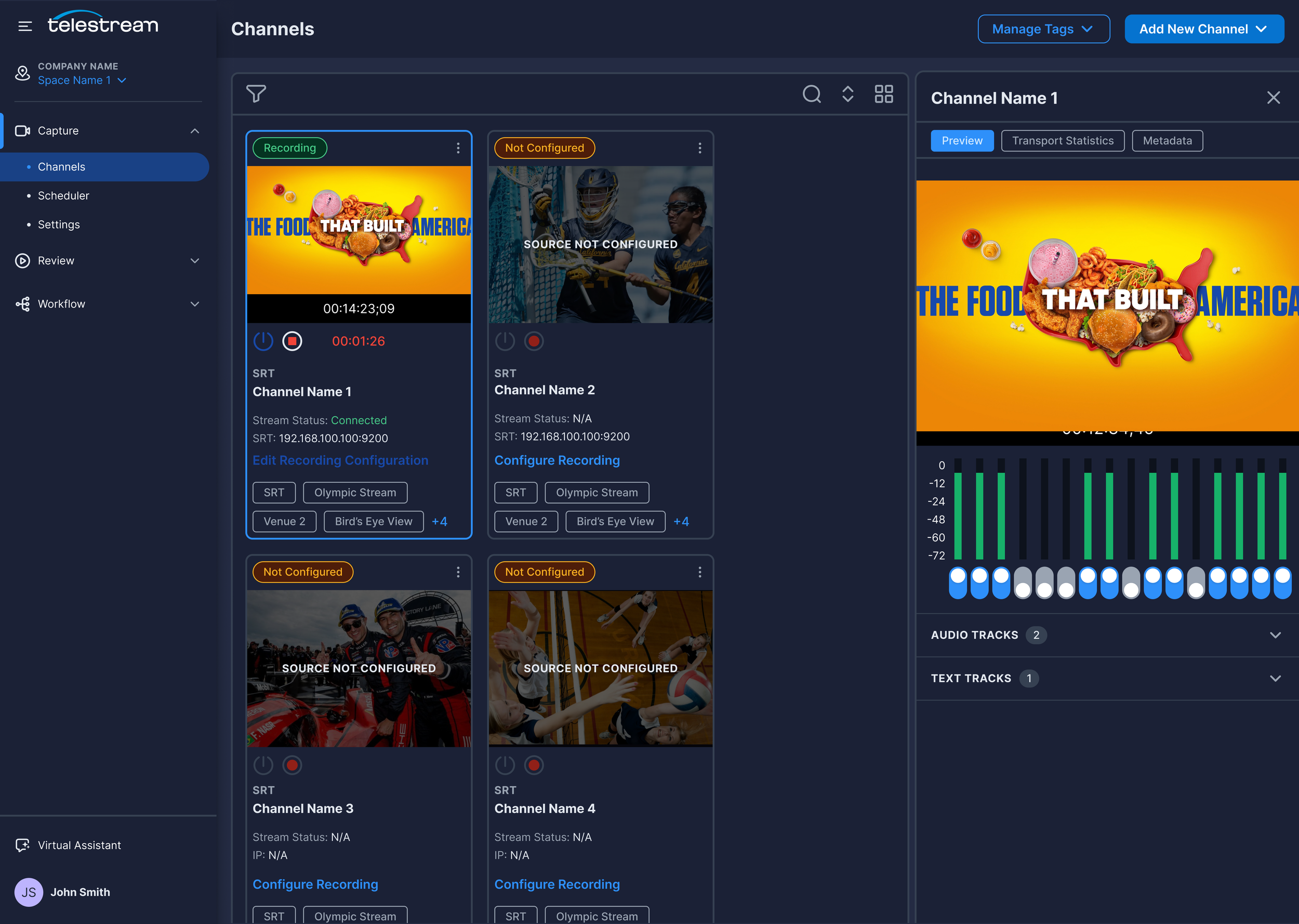
Put confidence inside the workflow.
Stream health lived outside the operator’s main task. That forced users to hunt for transport statistics and metadata while managing a live recording.
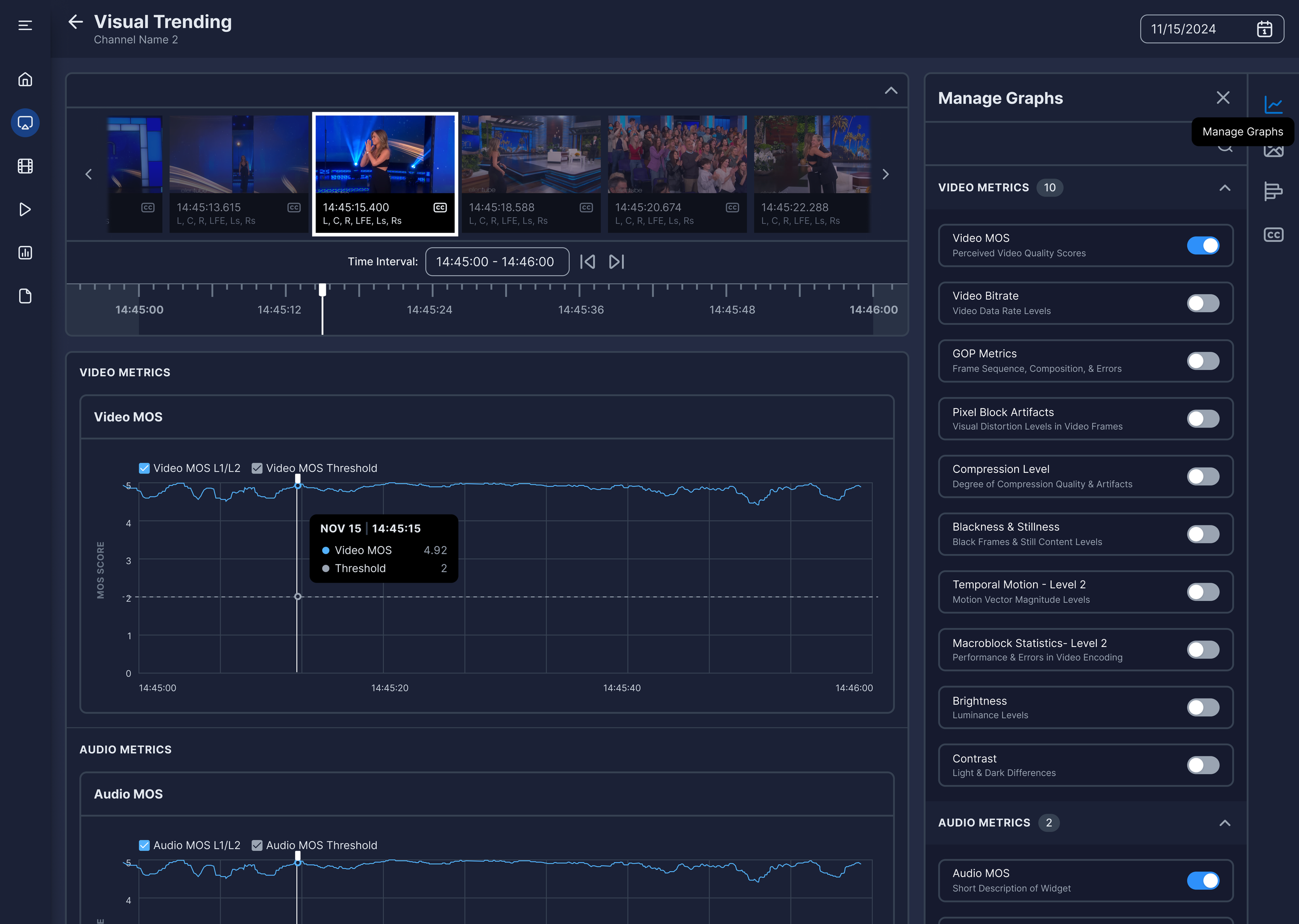
I brought preview, transport statistics, metadata, and quality checks into the channel experience so issues could be identified in context.
DESIGN RESPONSE
4. CLOUD & HYBRID
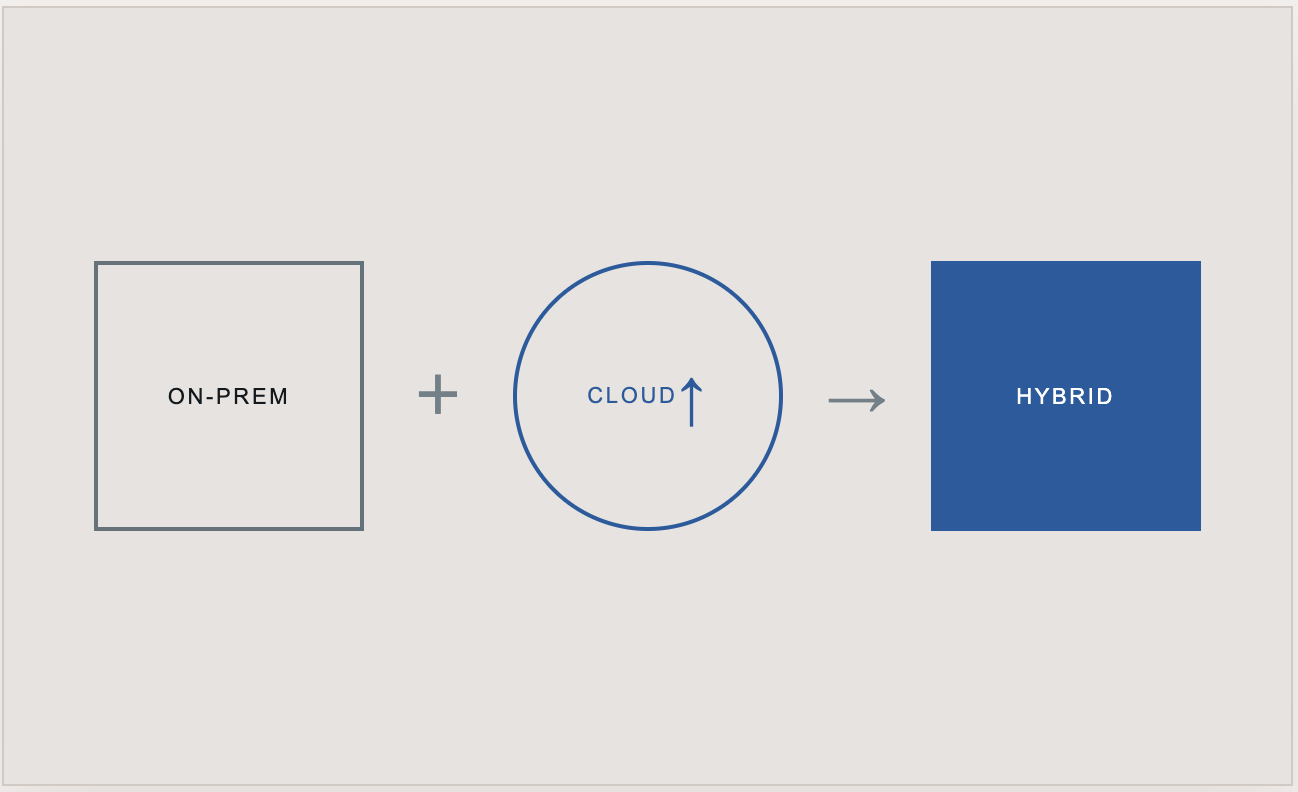
Modernize without abandoning trusted workflows.
Moving directly to cloud-only would have created new risk for enterprise customers with established on-premise infrastructure.
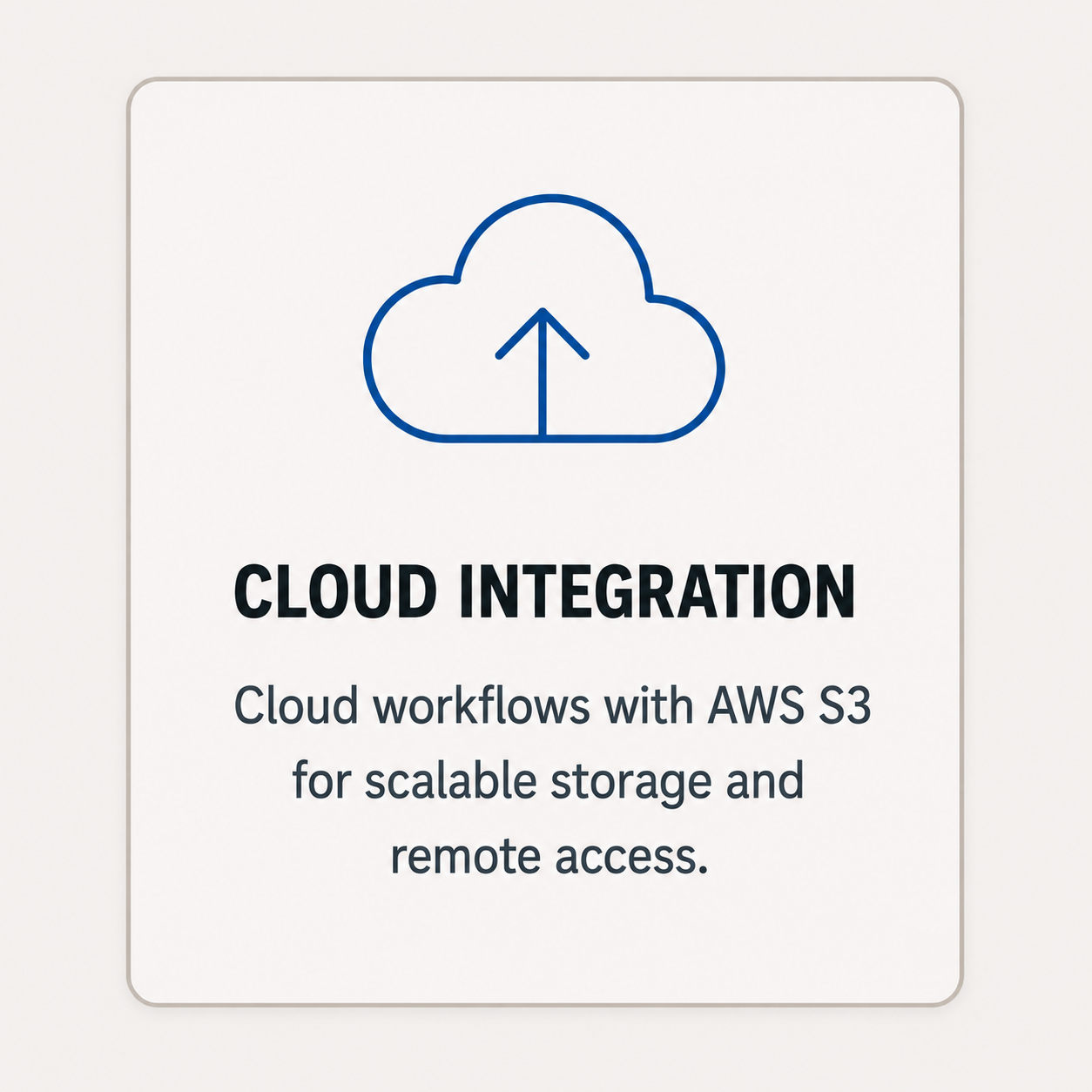
I designed a hybrid path that preserved core on-premise workflows while introducing AWS S3 storage, remote access, and a foundation for future cloud-native development.
DESIGN RESPONSE
04 • SOLUTION
One connected system,
not seven separate features.
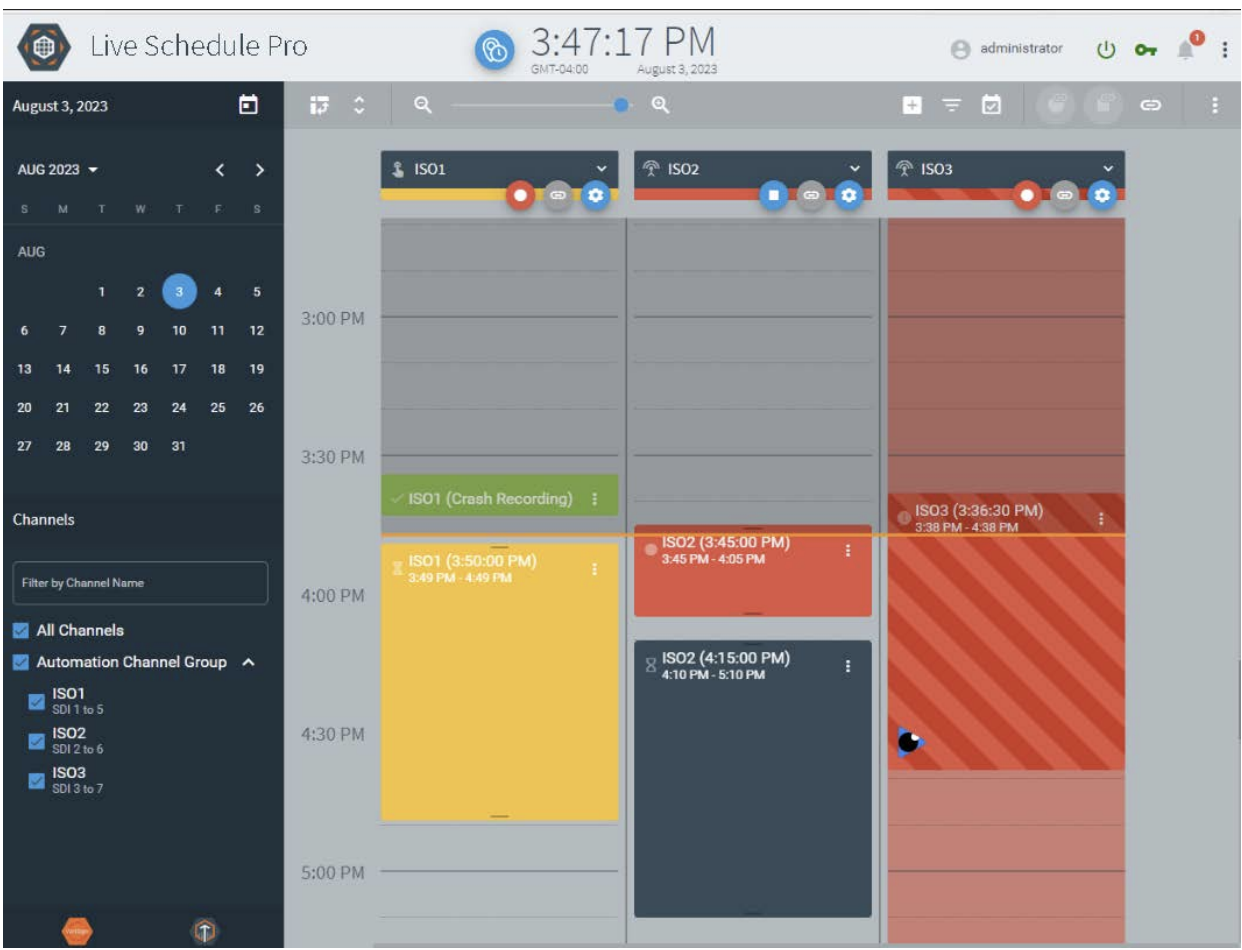
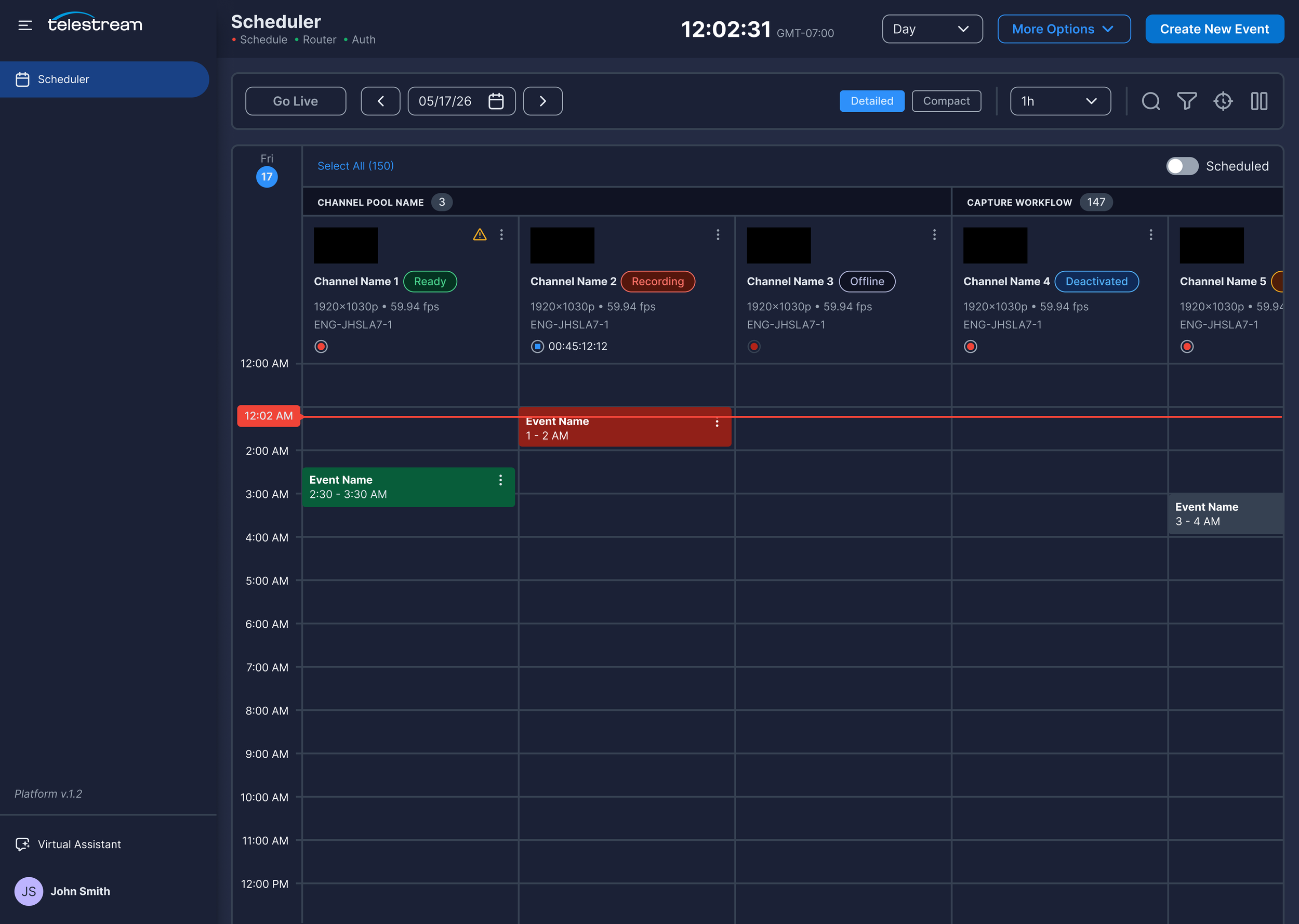
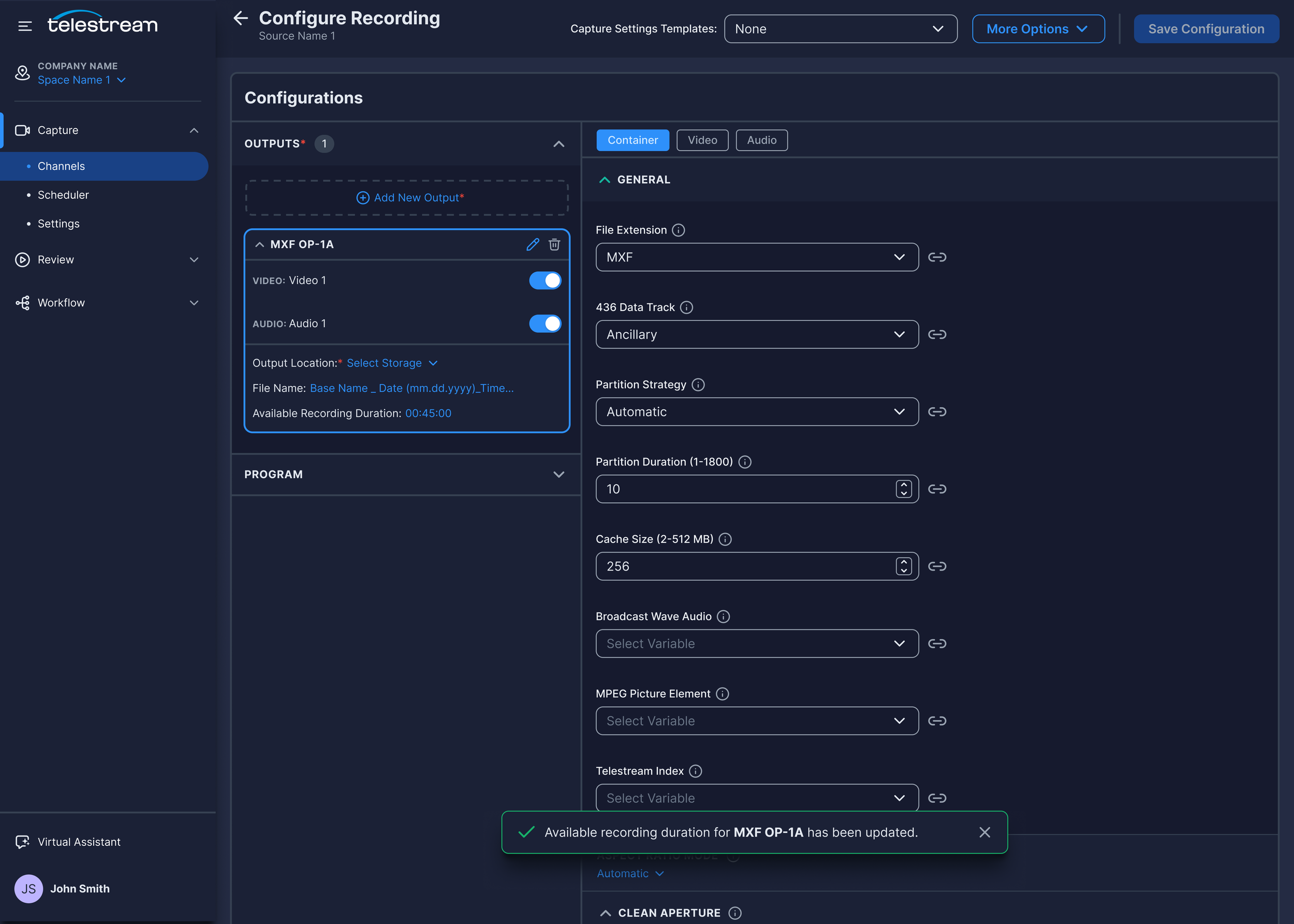
The redesign connected configuration, automation, monitoring, and scheduling into a consistent workflow across on-premise, hybrid, and cloud environments
GUIDED CONFIGURATION
Clear progress.
Fewer silent errors.
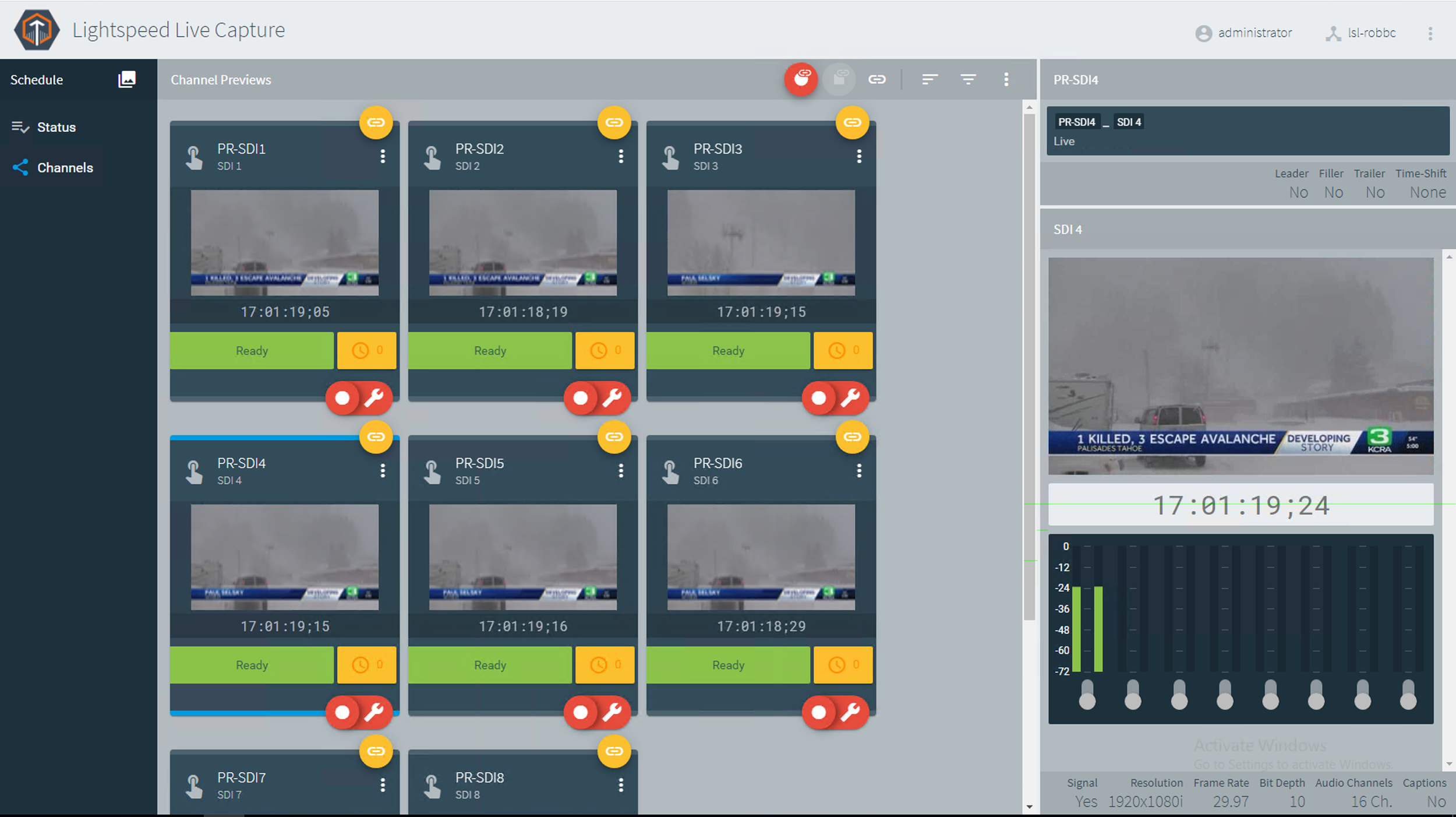
Inline validation, channel identification, and readiness states gave operators confidence before a live recording began.
Configuration status at a glance
Validation placed at the point of action
Consistent design-system patterns
05 • RESULTS
Better usability.
Real business impact.
USABILITY
88
SUS score, up from 62
SUCCESS
83%
Task success, up from 60%
SPEED
42%
Faster completion
91%
SATISFACTION
Reported clarity & ease
*Measured through comparative usability testing of the legacy and redesigned experiences.
Five new contracts signed after the NAB Show demo. All key enterprise clients retained.
🏆 TVBEurope Best of Show winner at IBC 2024 IBC2024 All Winners
06 • WHAT I LEARNED
In high-stakes systems,
clarity is a safety feature.
Automation earns trust only when its behavior is predictable. Cloud transformation touches the whole experience—not only infrastructure. And early engineering collaboration prevents costly design rework.